
SO! Reads: Todd Craig’s “K for the Way”: DJ Rhetoric and Literacy for 21st Century Writing Studies


or, Last Summer a DJ Saved My Life
“Hip Hop does work that a lot of other things don’t do” Young Guru (viii).
The way that we imagine English Studies, specifically Composition and Rhetoric (Comp/Rhet), today needs a radical shift. Specifically, we need new techniques for Writing Studies pedagogy to reach students in a more meaningful and contemporary fashion. Todd Craig’s “K for the Way:” DJ Rhetoric and Literacy for 21st Century Writing Studies (Utah State University Press, 2023) both documents the need for this shift and enacts it. Craig’s work enables us to recognize the pedagogical impact on writing that Hip Hop has had over the last 50 years—specifically how the DJ/deejay as twenty-first century new media reader and writer teaches students not just to think about sound, but to compose with it, too.
An Associate Professor of English at CUNY Graduate Center, Craig has little desire to shake the foundations of English Studies, but instead do what Hip Hop has always done—make a way where there is none. The point is to (re)imagine new ways of doing old things; in this case, of teaching and reaching students who arrive in First-Year Writing courses. “K for the Way” does more than demonstrate the ways in which the DJ is a twenty-first century pedagogical savant; it also teaches readers, using DJ Rhetoric and DJ Literacy, about the culture that makes them possible.
This summer, a DJ really did save my life: as someone who feels consistently overwhelmed by the vast nature of scholarly discourse, “K for the Way” gave me a chance to breathe, to identify with something that has been a part of me for the better part of my life, and to see myself in a conversation about a topic I am more than passionate about. For Craig, community, history, and culture are the core of his mission as a scholar, educator, and DJ.
Craig defines several new terms that bridge the worlds of Hip Hop and Composition and Rhetoric. First, we have DJ Rhetoric, which can be understood as the modes, methodologies, and discursive elements of the DJ. For Craig, it “encompasses the quality of oral, written, and sonic language that displays and expresses sociocultural, historical, and musical meanings, attitudes, and sentiments” (23). Next, there is DJ Literacy, which is the “sonic and auditory practices of reading, writing, critically thinking, speaking, and communicating through and with the rhetoric of Hip Hop DJ culture” (23). These two definitions, operating in conjunction, situate the DJ as a kind of griot, a figure that Adam Banks invokes as a carrier of tradition, stories, and histories in Digital Griots: African American Rhetoric in a Multimedia Age (Studies in Writing and Rhetoric) (2011). The mission of the griot is to carry stories and translate them to various audiences while adhering to the rhetorical conventions and modes of whichever audience they find themselves before; similarly, the DJ is responsible for “communicating the pulse and the evolution of a culture that once sat as ‘underground’ but now has dramatically evolved to ‘mainstream’” (25). These definitions serve as guides for the reader as they are tethered to all of the concepts and (re)imagining happening throughout the book.
Craig is intimately close to the work he is doing. He lives and breathes Hip Hop; and what should a book about the Hip Hop DJ be if not written by someone who embodies the role, culture, and practice of DJing? Craig uses a a research methodology known as hiphopography in which Hip Hop ways of being are central to studying it. Coined by James G. Spady, this term is defined as “a shared discourse with equanimity, not the usual hierarchical distancing techniques usually found in published and non-published (visual-TV) interviewers with rappers” (27). Craig states that hiphopography “allowed me to engage a variety of Hip Hop DJs while also maintaining my own shared values and sentiments around my love of Hip Hop culture and DJ practices” (28). Hiphopography constructs a conversational, intimate space—touched by history, culture, and music—wherein the interviewer and interviewee can engage and produce meaningful data. This methodology—and Craig’s many interviews with DJs about their craft—becomes part of the text’s core as we begin to see how Craig’s two-pronged argument connects DJ Rhetoric and DJ Literacy to bring both life throughout the book.
If one understands the DJ as a twenty-first century rhetorician and compositionist and considers the ways in which the DJ is a cultural meaning-maker, sponsor, and master sampler, then one can clearly see the connections between the DJ, DJ culture, and Writing Studies in the contemporary moment. In the first part of his argument supporting the significance of DJ Rhetoric and Literacy in writing pedagogy Craig asserts that, “it is essential that the academy at large works to strengthen students’ undergraduate experiences by reinforcing their racial, ethnic, and cultural ties” (14). This perspective provides the foundation for the second part of his argument that “the DJ (and thus, Hip Hop DJ culture) is the epicenter of Hip Hop culture’s creation” (23). Taken together, these dynamic arguments make the claim that the DJ offers a powerful model of a new media reader, writer, and critic. Today, our students come to writing classrooms with a “vast array of cultural capital. . .in their philosophical and cultural backpacks” (107). If we, as writing teachers, want to honor that cultural capital and build with it, we should follow Craig’s lead and look toward the DJ for some pointers on how to expand students’ access to a language that represents them.
Readers will also see a developing research agenda in “K for the Way” that thinks toward changing the culture beyond the present, while acknowledging the groundwork laid for the current moment and building genealogically upon that foundation, just as DJs do with sampling. Craig best exemplifies this when he writes, “in order to fully engage in a conversation—whether intellectual, pedestrian or otherwise—that discusses what DJ Rhetoric might look like, one has to think about the cultural and textual lineage of sponsors and mentors” (51). This notion of textual lineage is borrowed from Alfred W. Tatum who explains the term as “Similar to lineages in genealogical studies” and continues to note that textual lineage is “made up of texts (both literary and nonliterary) that are instrumental in one’s human development because of the meaning and significance one has garnered from them” (Tatum, qtd. in Craig, 51). Craig builds upon Tatum’s idea by introducing sonic lineage, which follows the same logic as Tatum’s term, but through sound (51). What becomes apparent, is that the DJ, as a cultural sponsor, can deploy sonic lineage as a way of communicating history and culture to members within and outside of the Hip Hop community and, more specifically, DJ culture.
Chapter three, especially, works at the interdisciplinary junction of Sound Studies, Writing Studies, and Hip Hop studies to convey a clear critique of the dominant discourse surrounding plagiarism. Craig is unsatisfied with the black-and-white conception of plagiarism as it presents itself in the academy. As a result, he moves to inquire “how we as practitioners [of teaching composition] approach citation methods and strategies within a twenty-first century landscape” (75). Craig promptly turns us toward the DJ’s conceptualization of sampling as a citation practice. Sampling in Hip Hop, as defined by Andrew Bartlett, “is not collaboration in any familiar sense of the term. It is a high-tech and highly selective archiving, bringing into dialogue by virtue of even the most slight representation” (77). The highly selective archiving, a.k.a crate diggin’, builds upon the idea of sonic lineage.
For the DJ, the process of diggin’ through crates to find that right sound, that one joint that going to get the party jumpin’, is a key element in the practice of “text constructing” (79). The Hip Hop sample functions alongside an understanding, offered by Alasdair Pennycook, of “transgressive-versus-nontransgressive intertextuality,” which, for an academic audience, complicates the idea of plagiarism.. The DJ becomes a figure through which we can understand intertextuality, sampling becomes the practice through which we can see parallels to citation through text construction, and the mix is where we begin, with the help of Pennycook, to complicate notions of plagiarism. In this chapter, readers are able to understand through sound.
Subsequently, Craig explores the concept of revision as it relates to the DJ’s ability to engage with an emcee on the point of “remix as revision” (107). Building from on Nancy Sommers’ article, “Revision Strategies of Student Writers and Experienced Adult Writers,” Craig lifts and examines four strategies of revision through the lens of the Hip Hop DJ: deletion, substitution, addition, and reordering (Sommers, qtd. in Craig, 107). These practices not only identify the Hip Hop DJ as a master of revision but also center the DJ, in the context of the writing classroom, as a key figure for understanding editorial practice. As teachers of writing—and especially for those of us who are deeply connected to Hip Hop culture—we have traditional scholars, such as Sommers, but we also have the DJ as cultural scholar, which offer new models with communicating and practicing the craft of writing in the twenty-first century.

Chapter Five, which is co-written by Craig and Carmen Kynard, centers on six women DJs: DJs Spinderella, Pam the Funkstress, Kuttin Kandi, Shorty Wop, Reborn, and Natasha Diggs to work toward developing a “Hip Hop Feminist Deejay Methodology” that positions women in Hip Hop culture as a key source of key knowledge production–as meaning-makers, theoreticians, storytellers–and as tastemakers in twenty-first century discourse about education, technologies, race, and gender. This chapter is also apt representation of hiphopography at work, as both Craig and Kynard ground their position in the interviews of these six women deejays, “deliberately situating their stories first… as opposed to the usual academic expectation that a tedious delineation of methods and an extant literature review come before a discussion of the actual subjects” (123).
In part, this chapter focuses on the affordances and limitations—political, social, and economic—present in DJ culture, and the effects it has on these women DJs to make it do what it does. For example, the introduction of the digital software Serato has simultaneously made access to music easier, and complicated access to the cultural archive that made the music possible in the first place. Natasha Diggs, states, “While she values the ability to access mp3 files so readily, she argues a deejay’s research and craft suffer, because many times the mp3 files do not include information about an artist’s name, history, or band” (129). Pam the Funkstress ties this sentiment up nicely when she argues, “There’s nothing like vinyl” (129).
The final chapter is fashioned like a Hip-Hop outro, with Craig leaving with a few parting ideas. Most important among them is his vision of “Comp 3.0,” a version of Comp/Rhet wherein “we have to push the scope of writing and rhetoric—with or without the field’s permission or acknowledgement” (171). For scholars of composition and rhetoric and writing teachers who ground part of their understanding of the field in Black Studies, Hip Hop, and the DJ, we gotta make it do what it do, regardless of who says what! Comp 3.0 does not seek approval or recognition from the powers that be; instead, it focuses on the new ways of thinking and writing, and of teaching, that we are able to conjure—with history, culture, and practice propelling us—when we invoke that which got us to the academy in the first place.
What is at stake, for those of us who engage Black Studies, Sonic Studies, Comp/Rhet, and Hip Hop Studies as critical points of departure for the teaching of writing, is that our presence—our being, methods, and our teaching—is crucial for developing a genealogy of scholars and world citizens who are aware of the myriad possibilities present in the twenty-first century.
—
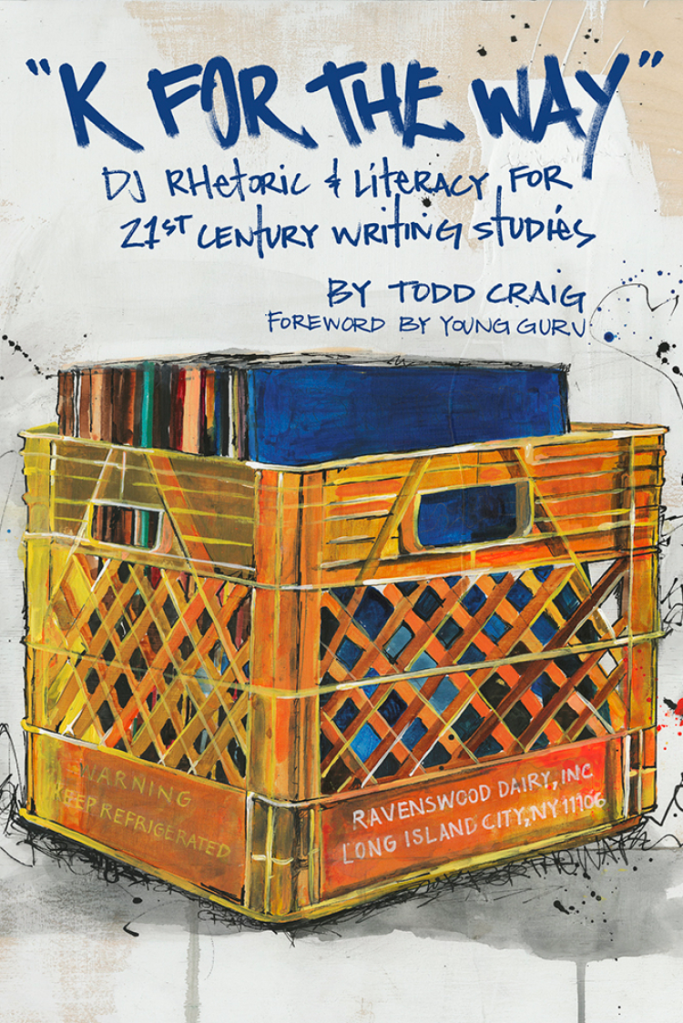
Featured Image: Cover Art for “K for the Way”: DJ Rhetoric and Literacy for 21st Century Writing Studies by Cathey White
—
DeVaughn (Dev) Harris is a PhD student studying composition and rhetoric in NYC. His academic interests are mainly in writing studies and pedagogy, but those are often supported by other sub-interests in music, creative writing, African American studies, and philosophy. When not reading or writing, Dev enjoys making music wherever and however possible. He has published music before under the collective AbstraktFlowz.
—

REWIND! . . .If you liked this post, you may also dig:
“Heavy Airplay, All Day with No Chorus”: Classroom Sonic Consciousness in the Playlist Project—Todd Craig
Deep Listening as Philogynoir: Playlists, Black Girl Idiom, and Love–Shakira Holt
SO! Reads: Steph Ceraso’s Sounding Composition: Multimodal Pedagogies for Embodied Listening--Airek Beauchamp
The Sounds of Anti-Anti-Essentialism: Listening to Black Consciousness in the Classroom- Carter Mathes
Contra La Pared: Reggaetón and Dissonance in Naarm, Melbourne–Lucreccia Quintanilla
Ill Communication: Hip Hop and Sound Studies–Jennifer Stoever
SO! Amplifies: Regina Bradley’s Outkasted Conversations
A Listening Mind: Sound Learning in a Literature Classroom–Nicole Brittingham Furlonge
Share this:

Echoes in Transit: Loudly Waiting at the Paso del Norte Border Region

This series listens to the political, gendered, queer(ed), racial engagements and class entanglements involved in proclaiming out loud: La-TIN-x. ChI-ca-NA. La-TI-ne. ChI-ca-n-@. Xi-can-x. Funded by an Andrew W. Mellon Foundation as part of the Crossing Latinidades Humanities Research Initiative, the Latinx Sound Cultures Studies Working Group critically considers the role of sound and listening in our formation as political subjects. Through both a comparative and cross-regional lens, we invite Latinx Sound Scholars to join us as we dialogue about our place within the larger fields of Chicanx/Latinx Studies and Sound Studies. We are delighted to publish our initial musings with Sounding Out!, a forum that has long prioritized sound from a queered, racial, working-class and “always-from-below” epistemological standpoint. —Ed. Dolores Inés Casillas
—
This post is co-authored by José Manuel Flores & Dolores Inés Casillas
A borderland is a vague and undetermined place created by the emotional residue of an unnatural boundary. It is in a constant state of transition.
Gloria Anzaldúa (1999)
Ciudad Juárez es número uno/
y la frontera más fabulosa y bella del mundo
Juan Gabriel (lyric to “Juárez es el #1” – 1984)
—
Geographically, the Paso del Norte (PdN) region includes the city of El Paso, Texas, Ciudad Juárez, Mexico, as well as neighboring cities in the state of New Mexico (see map). U.S. citizens live and play in Juárez, and those in Juárez (Juarenses), live and work in El Paso with families extended on both sides; continually moving back and forth. Yet, this broader region has long been plagued with sensationalizing headlines, both in the U.S. and in Mexico, that cast violent and limiting portrayals of these borderland communities. Recognized as sister cities, El Paso and Ciudad Juárez are seen less as close-knit siblings and more like distant cousins with Juárez routinely referred to undesirably as the little sister or ugly sister in comparison to El Paso. Indeed these hierarchical north/south (first world/not-quite-first-world) distinctions are products of histories of colonialism, unequal trade policies, and racial capitalist systems galvanized by immigrant detention camps (a tenant of the Immigration Industrial Complex). Within larger conversations about border cities, both Tijuana (San Diego) and Reynosa (McAllen) are recognized as the “primary” border cities due to their larger population size, transnational capital, and industrious reputations.
Two decades ago, Josh Kun’s concept of the “aural border” invited scholars to consider the US/Mexico border as a “field of sound, a terrain of musicality and music-making, of melodic convergence and dissonant clashing” (2000). Kun’s writings over the years have roused generations of sound scholars to listen to borders, border crossings, border communities and how they reverberate their economic, social, and migrant conditions. This essay intentionally moves away from Kun’s (beloved) border city of Tijuana and towards a less-referenced US/Mexico border city: Ciudad Juárez, Mexico. Here, 1,201 kilometers east of Tijuana, we offer an opportunity to listen to Juárez’s everyday bustling of migratory life through the digital sound repository, the Border Soundscapes Project.
Sound structures our social, cultural, and political relations, and as Tom Western reminds us succinctly: “sounds have politics” (2020). Indeed, Juárez’s soundscapes are microcosms of economic, immigration and border enforcement policies as the city’s migratory composition changes depending on the latest economic crisis in the global south. “Whether intentional or unintentional,” Sarah Barns insists “urban soundscapes are by-products of both active design strategies as well as infrastructure and socio-economic organization” (2014). In essence, listening to migrants within Juárez, along with those planning to traverse Ciudad Juárez (to el norte), shapes our multiethnic and multiracial understandings of Latinidad.
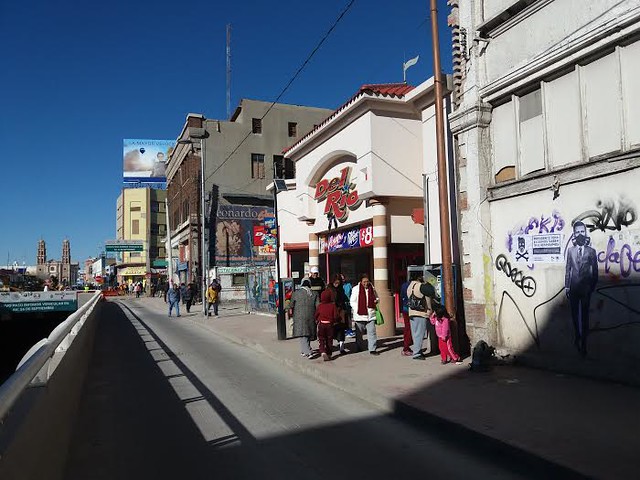
Field audio recordings of public life including nuanced linguistic expressions, comprise a rich sonic site that best demonstrates Juárez’s daily sounds of transit. This Project benefits tremendously from José Manuel Flores’s attentive ear, raised as a borderlander himself, and a seasoned crosser of the bridges linking Juárez and El Paso. Flores created this Project in 2018, the same year, Ciudad Juárez became a prominent make-shift, temporary “home” for groups of migrants – currently a majority of Venezuelan-nationals with previous waves of Cubanos and Salvadoreños. Within Juárez, these migrant caravans initially settled on the primary Paso del Norte bridge and later to nearby main border bridges. Migrants have felt comfortable settling in this arid city of approximately 1.5 million people, while others consider Juárez more of a “waiting room” before setting their sights on securing political asylum in the United States. Either way, Juárez becomes part of both their journey and resettlement.
Below are five instances where we listen to migrants in Juárez.
Track 1: Migrants in Ciudad Juarez: “Te traigo un manguito”
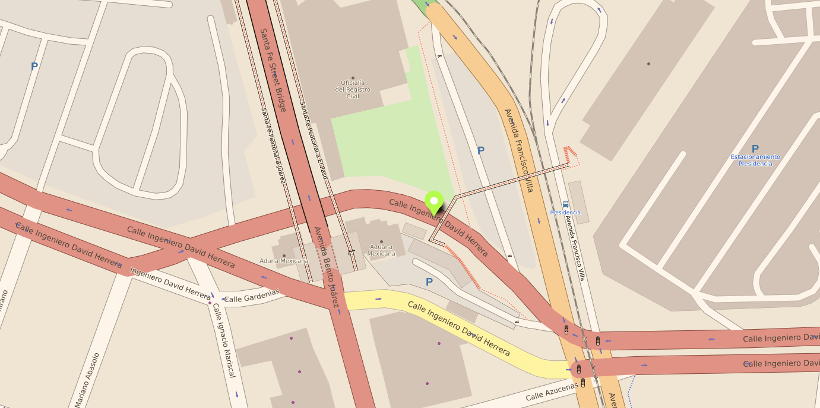
Near the Paso del Nte. International Bridge, in Juárez, on Avenida Juárez, a downtown street where people begin to line up to cross the border. Cars are heard passing. A Venezuelan man wants to rest on this hot day yet his friend cajoles him to get ready to work. He promises his resting friend un mangito o agua (a mango or water) as soon as he’s up and ready to tackle some work.
Track #2: Migrants in Ciudad Juarez: “Cualquier bendición que le sale a tu corazón es buena”
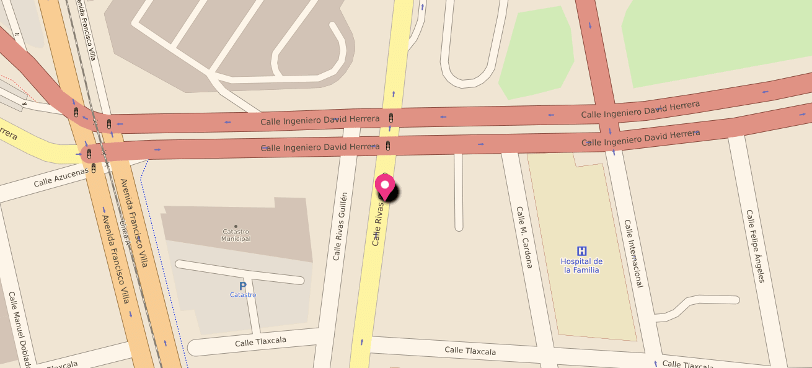
Near Juárez’s Migration’s national institute and Presidencia Municipal de Ciudad Juárez, an older woman cleans car windshields during traffic stops. As she cleans, she is heard laughing while conversing and doling out bendiciones (blessings) to those who gave her work. She’s assumed to be Venezuelan yet her use of the word “carnal” –a Mexican phrase to say brother – indicates that she’s been in Juárez for sometime.
Track #3: Migrants in Ciudad Juarez: “El Escandalo”
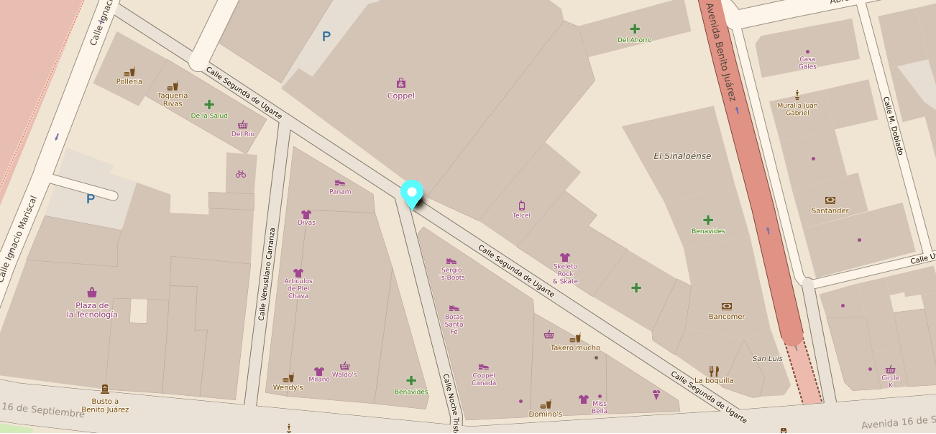
Local news highlights the influx of migrant caravans in promising tones. In an interview for local and national media in Mexico, Mr. José Luis Cruzalta, Cuban migrant, comments that: “no hay que ir para el lado de allá (EE.UU.), aquí se vive igual o mejor que del lado de allá, menos sacrificio, sin meterte en problemas, aquí no hay problemas de ningún tipo.”
“you don’t have to go there (USA), here you live the same or better than on that side, less sacrifice, without getting into trouble, there are no problems of any kind here, they can stay here.”
He later sends assurances that there is enough work for everyone and that only a willingness and desire to work is required, that nothing else.
Track #4: Migrants in Ciudad Juarez: “Rincon Cubano”
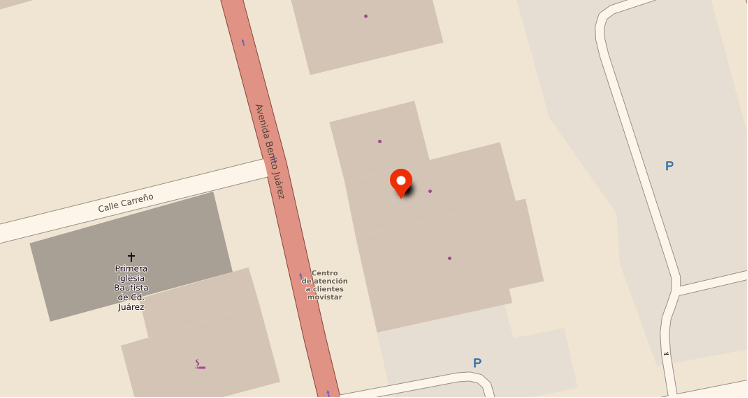
A group of Cuban migrants started a small Creole street food business offering “frituras de maíz” and Cuban “tamales.” The sound space of the downtown of Ciudad Juárez is nourished by the voices of a group of Cubans proclaiming Cuban Corn, “Maíz Cubano”. These contemporary Cuban criers conjure the city’s sonic memories of previous food vendors. Flores remembers fondly as a child the shouting of “Caldo de Oso” (Bear Broth) for sale and the fear that he’d find a grizzly bear in his soup.
Track #5: Migrants In Ciudad Juarez: Haitians Talking in La Taquería
The small restaurant,”La Taqueria,” in downtown Juárez has undergone ethnic transformations. A few years ago it used to be a place known for traditional Cuban food –el rincón cubano–, nowadays it is a place recognized for its tasty, Venezuelan food. Caribbean music attracts some Haitian migrants to this place, inside the restaurant there are some families eating and having a restful moment. Outside the place, there are some Haitian families moving through the city carrying their luggage.
Bonus Track and Outro
The Border Soundscapes Project offers an acoustic ecology of this region through a site that acts as part-archive, part-map, and perhaps even, part-love-song, à la the late singer Juan Gabriel, a globally famous Juaranese who dedicated six songs to his beloved home city.
The Border Soundscapes Project invites listeners to hear for yourself why Juan Gabriel characterized Juárez as the most beautiful borderland in the world. His lyrics fiercely defended Juárez, and decades later, the Border Soundscapes Projects demonstrates how Juarez, the “little sister,” dignifies their migrant communities, in the critical context of Gloría Anzaldúa’s conceptions of borders as vague, “unnatural boundaries” crafted by the “emotional residue” of two other siblings: colonialism and capitalism.
Inspired by the written musings of Valeria Luiselli (2019), the Border Soundscapes Project also functions as an “inventory of echoes,” where sounds are not simply recovered or used within a larger catalog project. Instead, sounds are considered “present in the time of recording and that, when we listen to them, remind us of the ones that are lost” (p. 141), and we would add, in transit. Most importantly, echoes cannot be placed on static, visual representations of standard “maps.” In offering audio snippets of Juárez’s public life, sound becomes a different migrant-led “scale of analysis” (DeLeon 2016); a type of audio counter-mapping of the U.S./Mexico border that lends itself uniquely to sound.
—
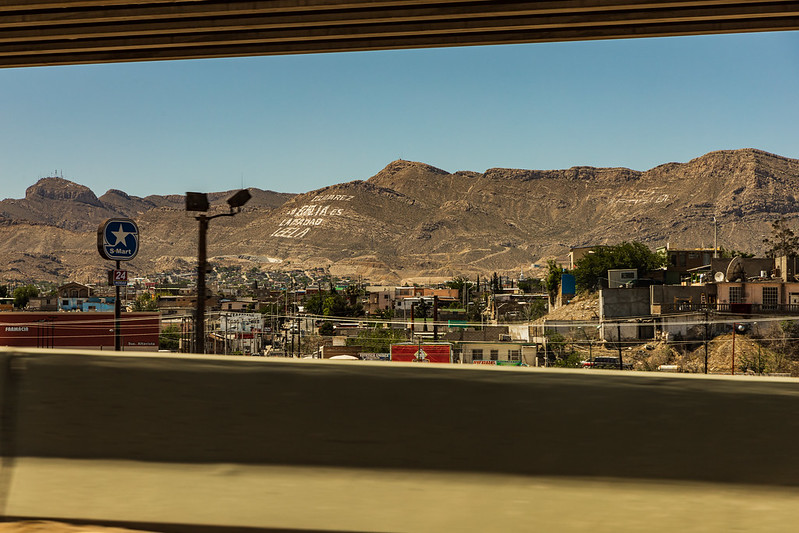
Featured Image by Flickr User Simon Foot, “Ciudad Juárez, from El Paso, Texas” (CC BY-NC-ND 2.0)
—
José Manuel Flores is a Ph.D. student in the Rhetoric and Composition Program at The University of Texas at El Paso. He holds an MA in Studies and Creative Processes in Art and Design. He considers that the sounds that arise between the Juarez and El Paso border are relevant because they contribute to the historical heritage of the region. That is why his interest as a researcher focuses on Sound Studies, specifically in the intersection between Soundscapes and philosophy from a disciplinary posture of rhetoric.
Dolores Inés Casillas is Professor of Chicana and Chicano Studies and Director of the Chicano Studies Institute (CSI) at the University of California, Santa Barbara. She is author of Sounds of Belonging: U.S. Spanish-language Radio and Public Advocacy (2014), which received two book prizes, and co-editor of the Companion to Latina/o Media Studies (2016) and Feeling It: Language, Race and Affect in Latinx Youth Learning (2018).
—

REWIND!…If you liked this post, you may also dig:
Xicanacimiento, Life-giving Sonics of Critical Consciousness—Esther Díaz Martín and Kristian E. Vasquez
Ronca Realness: Voices that Sound the Sucia Body—Cloe Gentile Reyes
SO! READS: Melissa Mora Hidalgo’s Mozlandia: Morrissey Fans in the Borderlands–Nabeel Zuberi
Your Voice is (Not) Your Passport–Michelle Pfeiffer
Óyeme Voz: U.S. Latin@ & Immigrant Communities Re-Sound Citizenship and Belonging-Nancy Morales
“Don’t Be Self-Conchas”: Listening to Mexican Styled Phonetics in Popular Culture*–Sara Hinijos and Inés Casillas
“Listening to the Border: ‘”2487″: Giving Voice in Diaspora’ and the Sound Art of Luz María Sánchez”-D. Ines Casillas
Share this:


Current Top Posts





April 2021

January 2020

November 2019

October 2019

August 2019

April 2014

November 2017

March 2015

December 2017

October 2015
 Sounding Out!
Recent Comments