
Ronca Realness: Voices that Sound the Sucia Body

This series listens to the political, gendered, queer(ed), racial engagements and class entanglements involved in proclaiming out loud: La-TIN-x. ChI-ca-NA. La-TI-ne. ChI-ca-n-@. Xi-can-x. Funded by an Andrew W. Mellon Foundation as part of the Crossing Latinidades Humanities Research Initiative, the Latinx Sound Cultures Studies Working Group critically considers the role of sound and listening in our formation as political subjects. Through both a comparative and cross-regional lens, we invite Latinx Sound Scholars to join us as we dialogue about our place within the larger fields of Chicanx/Latinx Studies and Sound Studies. We are delighted to publish our initial musings with Sounding Out!, a forum that has long prioritized sound from a queered, racial, working-class and “always-from-below” epistemological standpoint. —Ed. Dolores Inés Casillas
—
My Puerto Rican grandmother used to sing Pedro Infante’s “Las mañanitas” to all the women in the family on their birthdays, so naturally I grew up thinking this was a Puerto Rican song. Not quite – it’s Mexican. When my family came to New York City from Puerto Rico in the 1950s, they were starved of warm waters, mountains, and family members, but they were not starved of Spanish-language music and media thanks in large part to Mexico’s Golden Age of Cinema. In the Bronx, Puerto Ricans would go the theaters to watch movies like Nosotros los Pobres (1948),which popularized boleros like “Las Mañanitas.” This movie-going ritual in the wake of relocation and diaspora has provided the birthday soundtrack to my life.
My mother grew up listening to her father sing boleros, and she would later sing with the Florida Grand Opera Chorus when I was a child. My early knowledge of opera came from her. Growing up in Miami Beach, I would also listen to reggaetón and hip-hop in afterschool programs. The Parks & Recreation department would host dances for us, and that was where I first learned to dance perreo. My early musical surroundings represent what it means to be a colonial subject, to hear the Italianate vocal legacies of opera mixed with the Afro-Diasporic and Indigenous rhythms of reggaetón. This post contextualizes my experience within bolero’s colonial history and legacy particularly its operatic disciplining of brown and Black bodies and voices. Reggaetóneras provide models for sonic subversion by being ronca, raspy, or breathy, and thus overriding internalized Eurocentric dichotomies of feminine and masculine vocal timbres.
When I began my own operatic training in college, I was constantly told to “purify” my voice, to resist vocal “fry,” and to handle my acid reflux by avoiding spicy foods. I was steered away from singing the pop songs I had grown up with, and kept many musical activities secret, like when I soloed for the tango ensemble and my a cappella group. In graduate school, thanks to my Latina roommates, I began listening to reggaetón again. I reunited with the voices that raised me and was reassured that their teachings of resistance would always present themselves when I needed them.
After 20 years of listening to Ivy, I have located the descriptor that most closely encapsulates the way her voice sounds to me: ronca. This is Spanish for hoarse, and in my experience, it’s been used colloquially, mostly by women, to describe moments when their throats might feel sore, and their voices sound raspy, or masculine, even. Ronca has been articulated as an epistemology of vocal sounding in the artistry of lower-class Black reggaetón creators like Don Omar and more recently, Ozuna. Sounding ronca is a signifier of realness, of truly knowing the struggle of race and class oppression. It is a vocalization of full-body rage fueled by poverty and colonization.
Ivy’s voice is so special to me because she sounds like my aunt when she’s had a long day, my mom when she’s yelling, and my grandma after years of having long days and yelling at people. She sounds like the raw, unfiltered power that comes from exhaustion. She sounds like inner will and justified fury. She sounds like yelling at landlords and ex-husbands for hot water and child support. She sounds like age. And she always has, even when she was “young.” And this sound is even more beautiful and life-giving to me after 4+ years in a classical voice program that told me it was bad to sound hoarse or raspy, surveilled my eating, and perpetuated the colonization of Native and Black peoples through musical subjugation.

Operatic training utilizes mechanisms that are opposite of what is “natural” for me as a poor Latina from the barrio. It asks me to lift my voice, clarify it, and feminize it. This, to me, is antithetical to the girl who laughs really loudly, gets raspy often from yelling and eating too many Takis, and loves to sing from her chest. Ivy’s voice empowers my place as the antithesis. Even as I sang classically in college, my voice was still often described as “soulful,” “hoarse,” “raspy,” “throaty.” My voice, although in a moment of attempted cleanup in college, was read as having previously engaged in genres that disrupt colonial dichotomies of “art” and “noise.” The sonic Blackness– in particular the exoticized and tropicalized Blackness of Latinidad in the U.S.- of my timbre was legible, and perhaps even hyper-audible, in moments when I was trying to adapt to European art forms. Raquel Z. Rivera asserts in New York Ricans from the Hip Hop Zone (2003) that Latinidad doesn’t take away from Blackness but adds an element of exoticism to the Blackness. Thus, I have come to understand ronca voices as representative of a Latina/e liberatory sonic and embodied praxis that resists the derogatory discourse around racialized voices predicated on European ideals of cleanliness.
The ronca voice is negotiating suciedad, Deborah Vargas’ analytic for how queers of color may reclaim their abject bodies and social spaces. Readings of my voice in predominantly white spaces were contextualized by my queer ambiguously-brown body, which in direct opposition to whitening regimes, was sounding suciedad. This is what ronca voices do, and what I conceptualize as “ronca realness”: the tendency of Latinas/es to not hide behind the voice but rather keep it real with the audience via their vocal timbre. Ronca voices sound another option to Barthes’ hegemonic article “The Grain of the Voice,” which has been applied to Ivy Queen and Don Omar in Jennifer Domino Rudolph’s “‘Roncamos Porque Podemos,’” and Dara Goldman’s “Walk like a Woman, Talk like a Man: Ivy Queen’s Troubling of Gender.” I intend ronca realness to be understood as a queer of color vocal analytic born from community and lived experience.

Ronca voices reflect emotional states, flip colonial gendered vocal scripts, reveal if the singer had coffee that morning and Hot Cheetos the night before, and navigate tough musical contours with strain and stress; most importantly, they refuse to be white(ned). In college, my ronca realness was not always a choice. Keeping it real, in general, is sometimes undecided upon prior to the act of realness; it is an additional and deeply engrained responsibility that queer people of color have in white spaces to sound their dissent, or else face the continued exploitation of their communities. Further, these acts of realness may not even be legible as such but are often coded as bad behavior or an attitude problem.
Within communities of color and (im)migrant communities, it’s important to recognize that Ivy Queen’s ronca timbre was permissible because she was light-skinned, thin, and usually took on the masculine role of the rapper, rather than the feminine role of the dancer, in several of her videos. These privileges have left Afro-Latina ronca reggaetóneras like La Sista in the shadows.
La Sista has veered away from sounding ronca in recent years, but in her debut album, Majestad Negroide (2006), she praised Yoruba goddess Yemaya and Taino cacique Anacaona with a hoarse, raspy, bold sound. She is the Afro-Indigenous Latina many of us needed growing up, and her absence speaks to the ways in which Black ronca voices are policed and erased within Latinx culture and elsewhere. Let us praise her now.
—
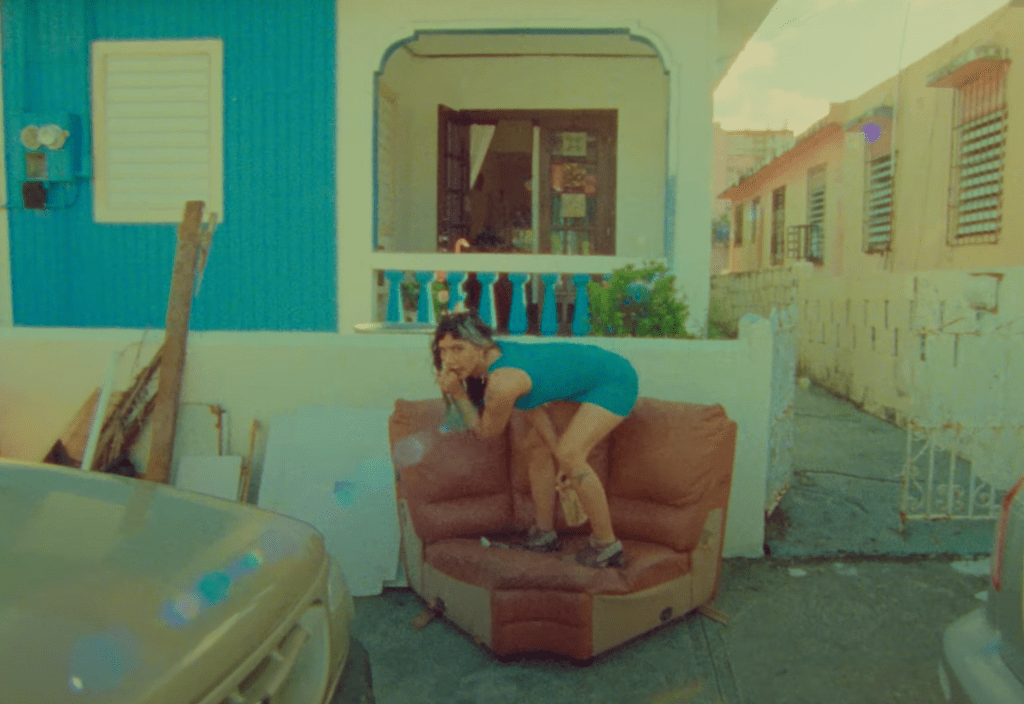
Featured Image: Still image by SO! from RaiNao’s “Tentretiene”
—
Cloe Gentile Reyes (she/her) is a queer Boricua scholar, poet, and performer from Miami Beach. She is a soon-to-be Faculty Fellow in NYU’s Department of Music and earned her PhD in Musicology from UC Santa Barbara. Her writing explores how Caribbean femmes navigate intergenerational trauma and healing through decolonial sound, fashion, and dance. Cloe’s poems have been featured in the womanist magazine, Brown Sugar Lit, and she has presented and performed at PopCon, Society for American Music, International Association for the Study of Popular Music-US Branch, among several others.
—

REWIND!…If you liked this post, you may also dig:
Contra La Pared: Reggaetón and Dissonance in Naarm, Melbourne—Lucreccia Quintanilla
“How Many Latinos are in this Motherfucking House?”: DJ Irene, Sonic Interpellations of Dissent and Queer Latinidad in ’90s Los Angeles—Eddy Francisco Alvarez Jr.
Unapologetic Paisa Chingona-ness: Listening to Fans’ Sonic Identities–Yessica Garcia Hernandez
SO! Podcast #74: Bonus Track for Spanish Rap & Sound Studies Forum
Cardi B: Bringing the Cold and Sexy to Hip Hop—Ashley Luthers
Share this:

Teaching Soundwalks in a Course on Gentrification, Black Music, and Corporate America

On May 5, 2018, the C-ville Weekly, a newspaper based out of Charlottesville, Virginia, published an article titled “Sex, drugs and rock ’n’ roll: new apartment complex promises at least one of those.” The headline referred to the complex being built at 600 West Main St. in Charlottesville. The complex has since been completed and studio bedrooms currently cost more than $1000 a month. As the C-ville Weekly headline shows, the developers were using the term and connotations of “rock ’n’ roll” to sell exclusive – and in many ways unaffordable – housing.
After reading this headline, I began to develop an idea for a summer course at my institution, the University of Virginia (UVA). I ultimately titled that course “Black Music and Corporate America” which I offered online during the summer of 2021 (syllabus available for download via the link above). Although the course discussed varied content – from the multi-ethnic, multi-racial, and multi-gendered histories of rock and roll to the endorsement of conspicuous forms of consumption in hip hop – I wanted to spend one unit focusing on the interrelationship between music, corporate America, and gentrification. I strove to solidify this connection by assigning two related articles. The first article, by geographer and sociologist Brandi Thomson Summers, argues that black residents in Washington D.C. adopt go-go music as a form of reclamation aesthetics to combat their city’s increasingly rampant gentrification. In the second article, ethnomusicologist Allie Martin conducts a soundwalk of D.C.’s Shaw District to forefront the experience of a black woman in the city and help displace white hearing as the default standard of interpreting sound (see Sounding Out!’s Soundwalking While POC series from Fall 2019). These two articles served as a foundation for one of the assignments the students had to complete in class: conducting a soundwalk of their own in which they had to walk around a field site of their choosing and think critically about the sounds they were hearing.
Throughout the summer sessions, students completed three main assignments related to the course topic. They had to think about marketing themselves and thus wrote a cover letter for a job or internship they were interested in pursuing in the future. We also, as a class, sent a suggestion to literary scholar John Patrick Leary, who has created a list of “keywords of capitalism:” buzzwords that get adopted in corporate lingo; we suggested “rockstar” as a term and offered him a brief explanation why:
Students also had to conduct a soundwalk. I asked them to model it after Martin’s and to also take into consideration Summers’ arguments about gentrification, white policing of black sound, and a community’s response to attempts to silence their music and culture.

The soundwalks I received merit sharing with readers of Sounding Out for three primary reasons: 1) The assignment benefited from the online format, especially since students could conduct soundwalks in Charlottesville as well as in their homes across the country. 2) the students made compelling arguments that deserve recognition. 2) the students brought up issues that teachers interested in assigning soundwalks in the future might want to preemptively address.
Students who walked around Charlottesville focused mostly on The Corner, the portion of the city where most of UVA’s student body eats, shops, and drinks. As one student noted, during the regular semester, hundreds of students populating The Corner on any given day during the semester can silence out – literally – the concerns of the homeless and the panhandlers who make the area their home. However, over the summer, Charlottesville’s Corner becomes significantly less populated and, as this student noted, much more silent. As a result of this silence, pedestrians might be much more attuned to Charlottesville’s rampant inequality. This student, over the course of their summer soundwalk on The Corner, came to a radical conclusion: while communities might need moratoriums on evictions, or moratoriums on construction, maybe Charlottesville needs a moratorium on student noise as well.

In addition to focusing on inequality, many students’ soundwalks pointed out discrepancies between what they saw and what they heard while on their soundwalks. Another student writing about The Corner noted how, as a transfer student, the music that they heard emanating from a barbershop helped make them feel at home in Charlottesville. Businesses on The Corner have historically not been entirely welcoming to people of color. Additionally, most pedestrians and patrons of The Corner are white. However, this student remarked how comfortable they felt on The Corner because they could hear one of their favorite artists, Moneybagg Yo, playing from the sound system of the barbershop they were going to visit. Long before they could visually see the business, the soundscape let this student know they were welcome. In this way, this barbershop helped create a sense of community in a similar way that the broadcasting of go-go music from Shaw’s many businesses helps create in Washington D.C.
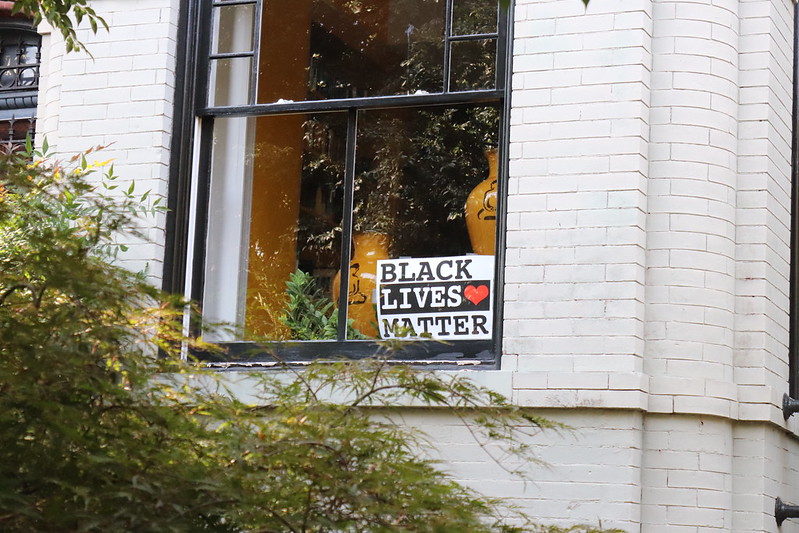
Another student focused specifically on the contradictions between the activism they “saw” demonstrated in their upper-class Boston suburb and the activism they “heard” while walking around their neighborhood. This student noted that residents of their neighborhood strove to create an inclusive atmosphere by putting up “Black Lives Matters” and “Immigrants Welcome” yard signs. However, they also cited Jennifer Lynn Stoever’s work – who we read in class – and noted the presence of what Stoever calls the “sonic color line.” As this students’ own field recordings of their neighborhood illuminated, most residents of this neighborhood valued silence. Harlemites during the 1940s and 1950s, as Stoever writes, certainly appreciated restful nights, but her scholarship also demonstrates how dominant narratives constructed black communities as “noisy,” “chaotic,” and “dangerous,” and white ones as “silent,” “efficient,” and “disciplined.” Although residents in this Boston suburb think of themselves as progressive and demonstrate their liberalism through visual signifiers such as yard signs, this student concluded that they still live in a community that privileges certain (silent) soundscapes. In doing so, such communities continue to perpetuate the sonic color line.
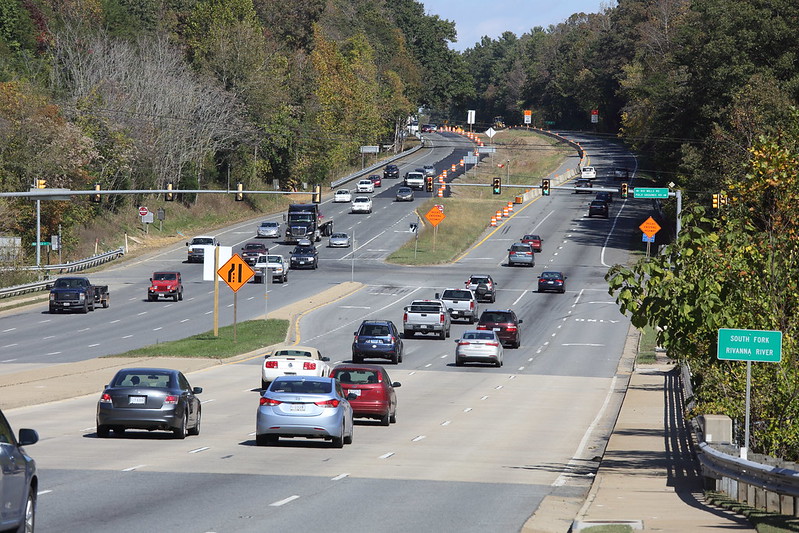
Admittedly, several students living in America’s suburbs struggled to conceive of the sounds they heard as worthy of discussion. For instance, the sounds of cars made frequent appearances in their writing but were often dismissed as inconsequential. Instead, students lamented that they were not experiencing a vibrant public sphere that resembled the setting of Spike Lee’s 1989 film, Do the Right Thing (a film we watched together in class), as if that representation wasn’t a very particular historicized and localized representation. On an individual basis, I tried to get students to think more critically about the sounds of cars in their neighborhood. We read about the role of automobile in the development of G-Funk during the early 1990s as well as the death of Jordan Davis, who was murdered in his car for playing rap too loudly. However, neither article resonated with students’ experience on their soundwalks since they were simply hearing cars passing by their houses or driving down the street. Most of the time, they could not tell what type of music was being listened to at all inside the car nor could they hear it emanate onto the street.
Therefore, teachers, depending on the living conditions of their students, might want to preemptively include discussions of car culture within American society. After all, more than go-go music broadcasted from storefronts, or second line parades, or music playing from boomboxes, or the noise of nature, (my) students typically hear cars in their day-to-day life. As a result, teachers assigning soundwalks may want to talk about the role of highway construction and the automobile industry on suburbanization and white flight. Discussions of automobiles within the context of environmental racism might also be useful for students to consider. Steph Ceraso’s Sounding Composition also discusses the immense time and energy corporations have devoted to car sounds and soundscapes within cars, buffering occupants from car noise as well as that of the neighborhoods outside.
In addition, I found that students need a more robust historical understanding of suburbanization in the United States, particularly alongside an understanding of their own racial and ethnic histories. Some students living African American suburbs could have benefited from some contextualization about when and how they came to be. Talking about suburbanization in general, the development of White suburban liberalism in the 1970s and 1980s would have helped the student living in a Boston suburb make more sense of the politics of their neighborhood. Karen Tongson’s Relocations also provides context for shifts in America’s suburban landscape after sweeping changes in immigration law in 1965, as well as a rethinking of expressions of sexuality in the suburbs. These are just some topics I wish I had focused on more to help prepare my students for their soundwalks.
Future teachers may feel inclined to refer to the conclusions my students came to, as well as the literature I wish I had included in course, as they think about assigning soundwalks in their own classes. Both my students and I appreciated the soundwalk assignment and its invitations to listen differently. Teaching soundwalks in a course focusing on “Black music and marketing strategy” prompted my own necessary meditation as a non-Black scholar working in this field. Guided by Loren Kajikawa’s new research on “Music, Hip Hop and the Challenge of Significant Difference” that examines how the popularity of courses on black music help subsidize a university’s classical music offerings, I want to incorporate future discussions of Black music as sonic diversity marketing in contemporary higher ed, both at the microlevel of scholarship and the macro- institutional level, which remains far from equitable despite ongoing challenges to its status quo. For students, the soundwalks–in their words–allowed them to learn about themselves and think differently about the area in which they live. They also become more attuned to their surroundings–questioning what makes a neighborhood and for whom?–and how different cultures use their voices where they live, necessary skills for our moment that will help us envision a world beyond it.
—
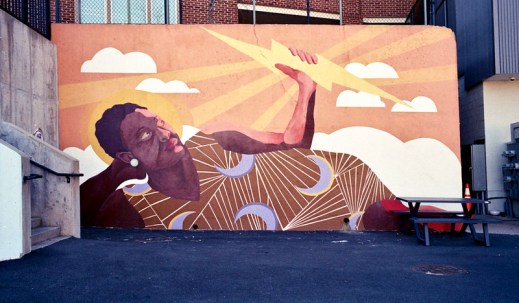
Featured Image: Wall Mural right next to Bowerbird Bakeshop in Charlottesville, VA, image by Tom Mills, (CC BY-SA 2.0)
—
Rami Toubia Stucky is a PhD candidate at the University of Virginia and scholar of the music of the African diaspora, music of the Americas, commercial culture, intercultural exchange, and music and migration. Sometimes he composes/arranges jazz music and plays drums. He is currently writing a dissertation on the arrival of Brazilian bossa nova to the United States during the 1960s. He runs a personal and professional website dedicated mostly to talking about the songs his sister likes.
—

REWIND!…If you liked this post, you may also dig all this good stuff about sound studies pedagogy! Good luck with Fall semester, folks!:
The Sounds of Anti-Anti-Essentialism: Listening to Black Consciousness in the Classroom- Carter Mathes
Making His Story Their Story: Teaching Hamilton at a Minority-serving Institution–Erika Gisela Abad
Deejaying her Listening: Learning through Life Stories of Human Rights Violations– Emmanuelle Sonntag and Bronwen Low
Audio Culture Studies: Scaffolding a Sequence of Assignments– Jentery Sayers
Deep Listening as Philogynoir: Playlists, Black Girl Idiom, and Love–Shakira Holt
“Toward A Civically Engaged Sound Studies, or ReSounding Binghamton”–Jennifer Lynn Stoever
“Heavy Airplay, All Day with No Chorus”: Classroom Sonic Consciousness in the Playlist Project—Todd Craig
SO! Podcast #79: Behind the Podcast: deconstructing scenes from AFRI0550, African American Health Activism – Nic John Ramos and Laura Garbes
Listening to #Occupy in the Classroom–D. Travers Scott
SO! Podcast #71: Everyday Sounds of Resilience and Being: Black Joy at School–Walter Gershon
Sounding Out! Podcast #13: Sounding Shakespeare in S(e)oul– Brooke Carlson
A Listening Mind: Sound Learning in a Literature Classroom–Nicole Brittingham Furlonge
My Voice, or On Not Staying Quiet–Kaitlyn Liu
(Re)Locating Soundscapes of Schooling: Learning to Listen to Children’s Lifeworlds–Cassie J. Brownell
If You Can Hear My Voice: A Beginner’s Guide to Teaching–Caroline Pinkston
Mukbang Cooks, Chews, and Heals – David Lee
SO! Podcast #80: Refugee Realities Miniseries–Steph Ceraso
Share this:


Current Top Posts





April 2021

January 2020

November 2019

October 2019

August 2019

April 2014

November 2017

March 2015

December 2017

October 2015
 Sounding Out!
Recent Comments