
Echoes in Transit: Loudly Waiting at the Paso del Norte Border Region

This series listens to the political, gendered, queer(ed), racial engagements and class entanglements involved in proclaiming out loud: La-TIN-x. ChI-ca-NA. La-TI-ne. ChI-ca-n-@. Xi-can-x. Funded by an Andrew W. Mellon Foundation as part of the Crossing Latinidades Humanities Research Initiative, the Latinx Sound Cultures Studies Working Group critically considers the role of sound and listening in our formation as political subjects. Through both a comparative and cross-regional lens, we invite Latinx Sound Scholars to join us as we dialogue about our place within the larger fields of Chicanx/Latinx Studies and Sound Studies. We are delighted to publish our initial musings with Sounding Out!, a forum that has long prioritized sound from a queered, racial, working-class and “always-from-below” epistemological standpoint. —Ed. Dolores Inés Casillas
—
This post is co-authored by José Manuel Flores & Dolores Inés Casillas
A borderland is a vague and undetermined place created by the emotional residue of an unnatural boundary. It is in a constant state of transition.
Gloria Anzaldúa (1999)
Ciudad Juárez es número uno/
y la frontera más fabulosa y bella del mundo
Juan Gabriel (lyric to “Juárez es el #1” – 1984)
—
Geographically, the Paso del Norte (PdN) region includes the city of El Paso, Texas, Ciudad Juárez, Mexico, as well as neighboring cities in the state of New Mexico (see map). U.S. citizens live and play in Juárez, and those in Juárez (Juarenses), live and work in El Paso with families extended on both sides; continually moving back and forth. Yet, this broader region has long been plagued with sensationalizing headlines, both in the U.S. and in Mexico, that cast violent and limiting portrayals of these borderland communities. Recognized as sister cities, El Paso and Ciudad Juárez are seen less as close-knit siblings and more like distant cousins with Juárez routinely referred to undesirably as the little sister or ugly sister in comparison to El Paso. Indeed these hierarchical north/south (first world/not-quite-first-world) distinctions are products of histories of colonialism, unequal trade policies, and racial capitalist systems galvanized by immigrant detention camps (a tenant of the Immigration Industrial Complex). Within larger conversations about border cities, both Tijuana (San Diego) and Reynosa (McAllen) are recognized as the “primary” border cities due to their larger population size, transnational capital, and industrious reputations.
Two decades ago, Josh Kun’s concept of the “aural border” invited scholars to consider the US/Mexico border as a “field of sound, a terrain of musicality and music-making, of melodic convergence and dissonant clashing” (2000). Kun’s writings over the years have roused generations of sound scholars to listen to borders, border crossings, border communities and how they reverberate their economic, social, and migrant conditions. This essay intentionally moves away from Kun’s (beloved) border city of Tijuana and towards a less-referenced US/Mexico border city: Ciudad Juárez, Mexico. Here, 1,201 kilometers east of Tijuana, we offer an opportunity to listen to Juárez’s everyday bustling of migratory life through the digital sound repository, the Border Soundscapes Project.
Sound structures our social, cultural, and political relations, and as Tom Western reminds us succinctly: “sounds have politics” (2020). Indeed, Juárez’s soundscapes are microcosms of economic, immigration and border enforcement policies as the city’s migratory composition changes depending on the latest economic crisis in the global south. “Whether intentional or unintentional,” Sarah Barns insists “urban soundscapes are by-products of both active design strategies as well as infrastructure and socio-economic organization” (2014). In essence, listening to migrants within Juárez, along with those planning to traverse Ciudad Juárez (to el norte), shapes our multiethnic and multiracial understandings of Latinidad.
Field audio recordings of public life including nuanced linguistic expressions, comprise a rich sonic site that best demonstrates Juárez’s daily sounds of transit. This Project benefits tremendously from José Manuel Flores’s attentive ear, raised as a borderlander himself, and a seasoned crosser of the bridges linking Juárez and El Paso. Flores created this Project in 2018, the same year, Ciudad Juárez became a prominent make-shift, temporary “home” for groups of migrants – currently a majority of Venezuelan-nationals with previous waves of Cubanos and Salvadoreños. Within Juárez, these migrant caravans initially settled on the primary Paso del Norte bridge and later to nearby main border bridges. Migrants have felt comfortable settling in this arid city of approximately 1.5 million people, while others consider Juárez more of a “waiting room” before setting their sights on securing political asylum in the United States. Either way, Juárez becomes part of both their journey and resettlement.
Below are five instances where we listen to migrants in Juárez.
Track 1: Migrants in Ciudad Juarez: “Te traigo un manguito”
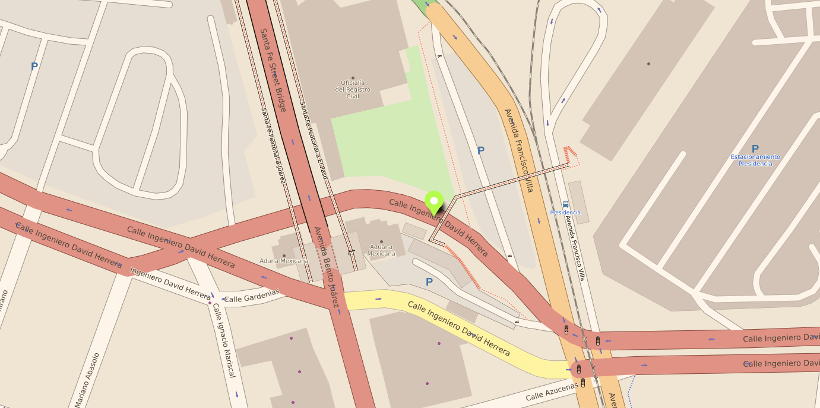
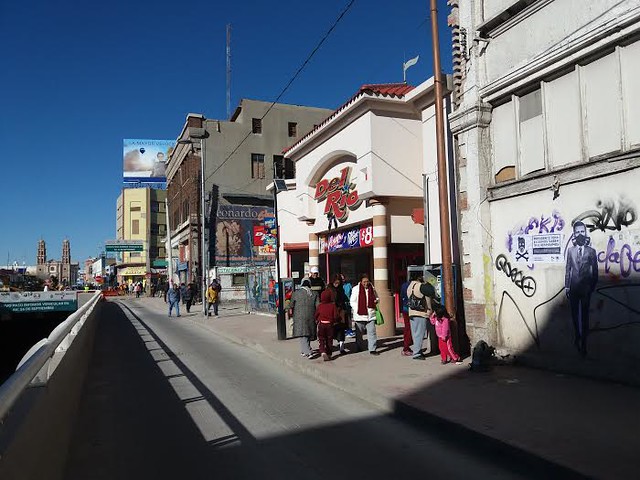
Near the Paso del Nte. International Bridge, in Juárez, on Avenida Juárez, a downtown street where people begin to line up to cross the border. Cars are heard passing. A Venezuelan man wants to rest on this hot day yet his friend cajoles him to get ready to work. He promises his resting friend un mangito o agua (a mango or water) as soon as he’s up and ready to tackle some work.
Track #2: Migrants in Ciudad Juarez: “Cualquier bendición que le sale a tu corazón es buena”
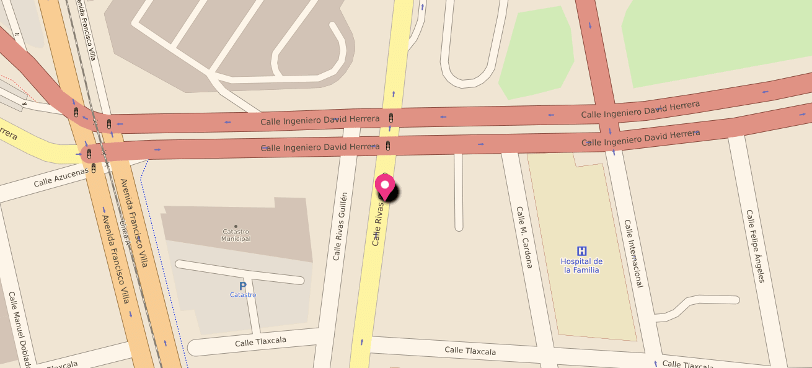
Near Juárez’s Migration’s national institute and Presidencia Municipal de Ciudad Juárez, an older woman cleans car windshields during traffic stops. As she cleans, she is heard laughing while conversing and doling out bendiciones (blessings) to those who gave her work. She’s assumed to be Venezuelan yet her use of the word “carnal” –a Mexican phrase to say brother – indicates that she’s been in Juárez for sometime.
Track #3: Migrants in Ciudad Juarez: “El Escandalo”
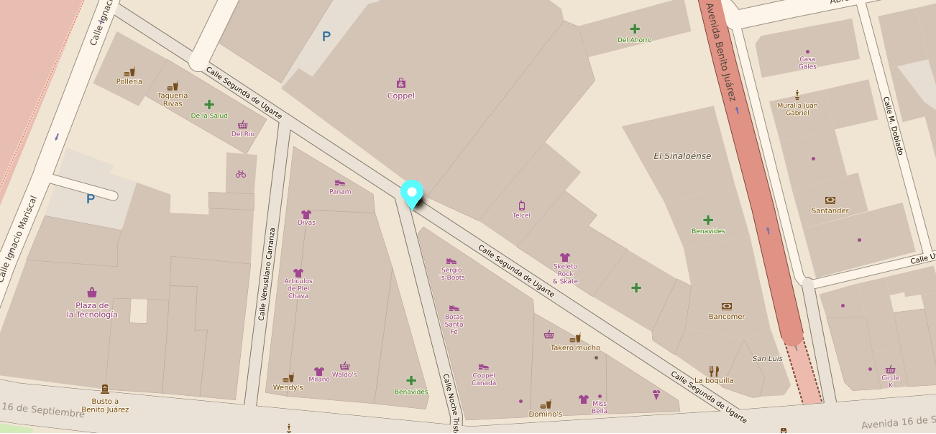
Local news highlights the influx of migrant caravans in promising tones. In an interview for local and national media in Mexico, Mr. José Luis Cruzalta, Cuban migrant, comments that: “no hay que ir para el lado de allá (EE.UU.), aquí se vive igual o mejor que del lado de allá, menos sacrificio, sin meterte en problemas, aquí no hay problemas de ningún tipo.”
“you don’t have to go there (USA), here you live the same or better than on that side, less sacrifice, without getting into trouble, there are no problems of any kind here, they can stay here.”
He later sends assurances that there is enough work for everyone and that only a willingness and desire to work is required, that nothing else.
Track #4: Migrants in Ciudad Juarez: “Rincon Cubano”
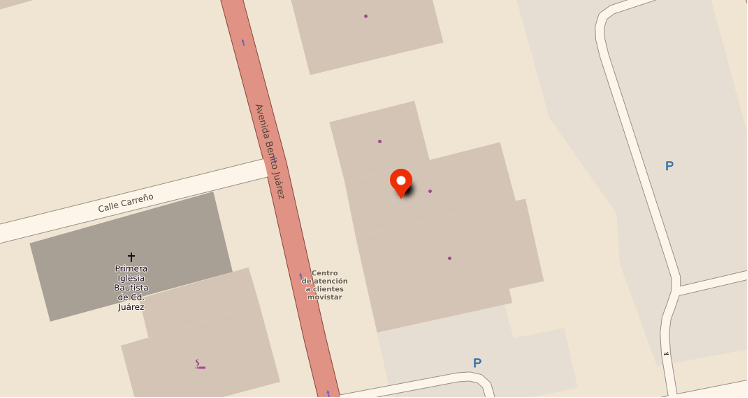
A group of Cuban migrants started a small Creole street food business offering “frituras de maíz” and Cuban “tamales.” The sound space of the downtown of Ciudad Juárez is nourished by the voices of a group of Cubans proclaiming Cuban Corn, “Maíz Cubano”. These contemporary Cuban criers conjure the city’s sonic memories of previous food vendors. Flores remembers fondly as a child the shouting of “Caldo de Oso” (Bear Broth) for sale and the fear that he’d find a grizzly bear in his soup.
Track #5: Migrants In Ciudad Juarez: Haitians Talking in La Taquería
The small restaurant,”La Taqueria,” in downtown Juárez has undergone ethnic transformations. A few years ago it used to be a place known for traditional Cuban food –el rincón cubano–, nowadays it is a place recognized for its tasty, Venezuelan food. Caribbean music attracts some Haitian migrants to this place, inside the restaurant there are some families eating and having a restful moment. Outside the place, there are some Haitian families moving through the city carrying their luggage.
Bonus Track and Outro
The Border Soundscapes Project offers an acoustic ecology of this region through a site that acts as part-archive, part-map, and perhaps even, part-love-song, à la the late singer Juan Gabriel, a globally famous Juaranese who dedicated six songs to his beloved home city.
The Border Soundscapes Project invites listeners to hear for yourself why Juan Gabriel characterized Juárez as the most beautiful borderland in the world. His lyrics fiercely defended Juárez, and decades later, the Border Soundscapes Projects demonstrates how Juarez, the “little sister,” dignifies their migrant communities, in the critical context of Gloría Anzaldúa’s conceptions of borders as vague, “unnatural boundaries” crafted by the “emotional residue” of two other siblings: colonialism and capitalism.
Inspired by the written musings of Valeria Luiselli (2019), the Border Soundscapes Project also functions as an “inventory of echoes,” where sounds are not simply recovered or used within a larger catalog project. Instead, sounds are considered “present in the time of recording and that, when we listen to them, remind us of the ones that are lost” (p. 141), and we would add, in transit. Most importantly, echoes cannot be placed on static, visual representations of standard “maps.” In offering audio snippets of Juárez’s public life, sound becomes a different migrant-led “scale of analysis” (DeLeon 2016); a type of audio counter-mapping of the U.S./Mexico border that lends itself uniquely to sound.
—
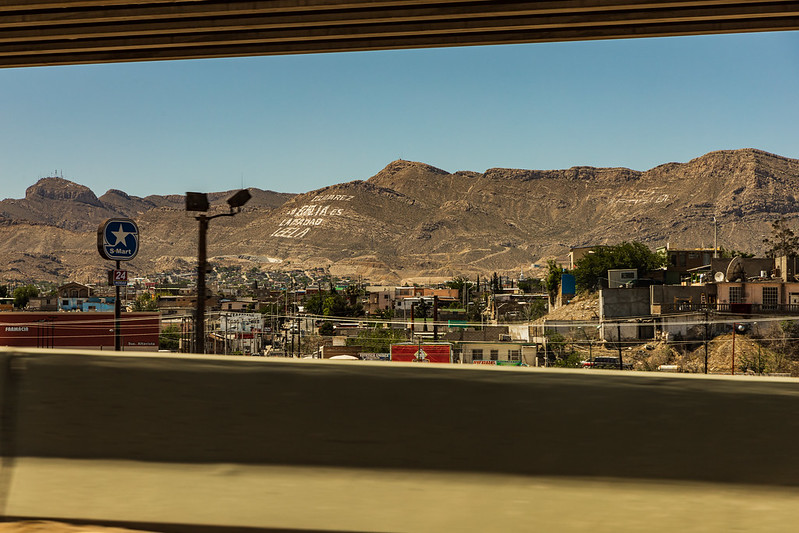
Featured Image by Flickr User Simon Foot, “Ciudad Juárez, from El Paso, Texas” (CC BY-NC-ND 2.0)
—
José Manuel Flores is a Ph.D. student in the Rhetoric and Composition Program at The University of Texas at El Paso. He holds an MA in Studies and Creative Processes in Art and Design. He considers that the sounds that arise between the Juarez and El Paso border are relevant because they contribute to the historical heritage of the region. That is why his interest as a researcher focuses on Sound Studies, specifically in the intersection between Soundscapes and philosophy from a disciplinary posture of rhetoric.
Dolores Inés Casillas is Professor of Chicana and Chicano Studies and Director of the Chicano Studies Institute (CSI) at the University of California, Santa Barbara. She is author of Sounds of Belonging: U.S. Spanish-language Radio and Public Advocacy (2014), which received two book prizes, and co-editor of the Companion to Latina/o Media Studies (2016) and Feeling It: Language, Race and Affect in Latinx Youth Learning (2018).
—

REWIND!…If you liked this post, you may also dig:
Xicanacimiento, Life-giving Sonics of Critical Consciousness—Esther Díaz Martín and Kristian E. Vasquez
Ronca Realness: Voices that Sound the Sucia Body—Cloe Gentile Reyes
SO! READS: Melissa Mora Hidalgo’s Mozlandia: Morrissey Fans in the Borderlands–Nabeel Zuberi
Your Voice is (Not) Your Passport–Michelle Pfeiffer
Óyeme Voz: U.S. Latin@ & Immigrant Communities Re-Sound Citizenship and Belonging-Nancy Morales
“Don’t Be Self-Conchas”: Listening to Mexican Styled Phonetics in Popular Culture*–Sara Hinijos and Inés Casillas
“Listening to the Border: ‘”2487″: Giving Voice in Diaspora’ and the Sound Art of Luz María Sánchez”-D. Ines Casillas
Share this:

Ronca Realness: Voices that Sound the Sucia Body
This series listens to the political, gendered, queer(ed), racial engagements and class entanglements involved in proclaiming out loud: La-TIN-x. ChI-ca-NA. La-TI-ne. ChI-ca-n-@. Xi-can-x. Funded by an Andrew W. Mellon Foundation as part of the Crossing Latinidades Humanities Research Initiative, the Latinx Sound Cultures Studies Working Group critically considers the role of sound and listening in our formation as political subjects. Through both a comparative and cross-regional lens, we invite Latinx Sound Scholars to join us as we dialogue about our place within the larger fields of Chicanx/Latinx Studies and Sound Studies. We are delighted to publish our initial musings with Sounding Out!, a forum that has long prioritized sound from a queered, racial, working-class and “always-from-below” epistemological standpoint. —Ed. Dolores Inés Casillas
—
My Puerto Rican grandmother used to sing Pedro Infante’s “Las mañanitas” to all the women in the family on their birthdays, so naturally I grew up thinking this was a Puerto Rican song. Not quite – it’s Mexican. When my family came to New York City from Puerto Rico in the 1950s, they were starved of warm waters, mountains, and family members, but they were not starved of Spanish-language music and media thanks in large part to Mexico’s Golden Age of Cinema. In the Bronx, Puerto Ricans would go the theaters to watch movies like Nosotros los Pobres (1948),which popularized boleros like “Las Mañanitas.” This movie-going ritual in the wake of relocation and diaspora has provided the birthday soundtrack to my life.
My mother grew up listening to her father sing boleros, and she would later sing with the Florida Grand Opera Chorus when I was a child. My early knowledge of opera came from her. Growing up in Miami Beach, I would also listen to reggaetón and hip-hop in afterschool programs. The Parks & Recreation department would host dances for us, and that was where I first learned to dance perreo. My early musical surroundings represent what it means to be a colonial subject, to hear the Italianate vocal legacies of opera mixed with the Afro-Diasporic and Indigenous rhythms of reggaetón. This post contextualizes my experience within bolero’s colonial history and legacy particularly its operatic disciplining of brown and Black bodies and voices. Reggaetóneras provide models for sonic subversion by being ronca, raspy, or breathy, and thus overriding internalized Eurocentric dichotomies of feminine and masculine vocal timbres.
When I began my own operatic training in college, I was constantly told to “purify” my voice, to resist vocal “fry,” and to handle my acid reflux by avoiding spicy foods. I was steered away from singing the pop songs I had grown up with, and kept many musical activities secret, like when I soloed for the tango ensemble and my a cappella group. In graduate school, thanks to my Latina roommates, I began listening to reggaetón again. I reunited with the voices that raised me and was reassured that their teachings of resistance would always present themselves when I needed them.
After 20 years of listening to Ivy, I have located the descriptor that most closely encapsulates the way her voice sounds to me: ronca. This is Spanish for hoarse, and in my experience, it’s been used colloquially, mostly by women, to describe moments when their throats might feel sore, and their voices sound raspy, or masculine, even. Ronca has been articulated as an epistemology of vocal sounding in the artistry of lower-class Black reggaetón creators like Don Omar and more recently, Ozuna. Sounding ronca is a signifier of realness, of truly knowing the struggle of race and class oppression. It is a vocalization of full-body rage fueled by poverty and colonization.
Ivy’s voice is so special to me because she sounds like my aunt when she’s had a long day, my mom when she’s yelling, and my grandma after years of having long days and yelling at people. She sounds like the raw, unfiltered power that comes from exhaustion. She sounds like inner will and justified fury. She sounds like yelling at landlords and ex-husbands for hot water and child support. She sounds like age. And she always has, even when she was “young.” And this sound is even more beautiful and life-giving to me after 4+ years in a classical voice program that told me it was bad to sound hoarse or raspy, surveilled my eating, and perpetuated the colonization of Native and Black peoples through musical subjugation.

Operatic training utilizes mechanisms that are opposite of what is “natural” for me as a poor Latina from the barrio. It asks me to lift my voice, clarify it, and feminize it. This, to me, is antithetical to the girl who laughs really loudly, gets raspy often from yelling and eating too many Takis, and loves to sing from her chest. Ivy’s voice empowers my place as the antithesis. Even as I sang classically in college, my voice was still often described as “soulful,” “hoarse,” “raspy,” “throaty.” My voice, although in a moment of attempted cleanup in college, was read as having previously engaged in genres that disrupt colonial dichotomies of “art” and “noise.” The sonic Blackness– in particular the exoticized and tropicalized Blackness of Latinidad in the U.S.- of my timbre was legible, and perhaps even hyper-audible, in moments when I was trying to adapt to European art forms. Raquel Z. Rivera asserts in New York Ricans from the Hip Hop Zone (2003) that Latinidad doesn’t take away from Blackness but adds an element of exoticism to the Blackness. Thus, I have come to understand ronca voices as representative of a Latina/e liberatory sonic and embodied praxis that resists the derogatory discourse around racialized voices predicated on European ideals of cleanliness.
The ronca voice is negotiating suciedad, Deborah Vargas’ analytic for how queers of color may reclaim their abject bodies and social spaces. Readings of my voice in predominantly white spaces were contextualized by my queer ambiguously-brown body, which in direct opposition to whitening regimes, was sounding suciedad. This is what ronca voices do, and what I conceptualize as “ronca realness”: the tendency of Latinas/es to not hide behind the voice but rather keep it real with the audience via their vocal timbre. Ronca voices sound another option to Barthes’ hegemonic article “The Grain of the Voice,” which has been applied to Ivy Queen and Don Omar in Jennifer Domino Rudolph’s “‘Roncamos Porque Podemos,’” and Dara Goldman’s “Walk like a Woman, Talk like a Man: Ivy Queen’s Troubling of Gender.” I intend ronca realness to be understood as a queer of color vocal analytic born from community and lived experience.

Ronca voices reflect emotional states, flip colonial gendered vocal scripts, reveal if the singer had coffee that morning and Hot Cheetos the night before, and navigate tough musical contours with strain and stress; most importantly, they refuse to be white(ned). In college, my ronca realness was not always a choice. Keeping it real, in general, is sometimes undecided upon prior to the act of realness; it is an additional and deeply engrained responsibility that queer people of color have in white spaces to sound their dissent, or else face the continued exploitation of their communities. Further, these acts of realness may not even be legible as such but are often coded as bad behavior or an attitude problem.
Within communities of color and (im)migrant communities, it’s important to recognize that Ivy Queen’s ronca timbre was permissible because she was light-skinned, thin, and usually took on the masculine role of the rapper, rather than the feminine role of the dancer, in several of her videos. These privileges have left Afro-Latina ronca reggaetóneras like La Sista in the shadows.
La Sista has veered away from sounding ronca in recent years, but in her debut album, Majestad Negroide (2006), she praised Yoruba goddess Yemaya and Taino cacique Anacaona with a hoarse, raspy, bold sound. She is the Afro-Indigenous Latina many of us needed growing up, and her absence speaks to the ways in which Black ronca voices are policed and erased within Latinx culture and elsewhere. Let us praise her now.
—
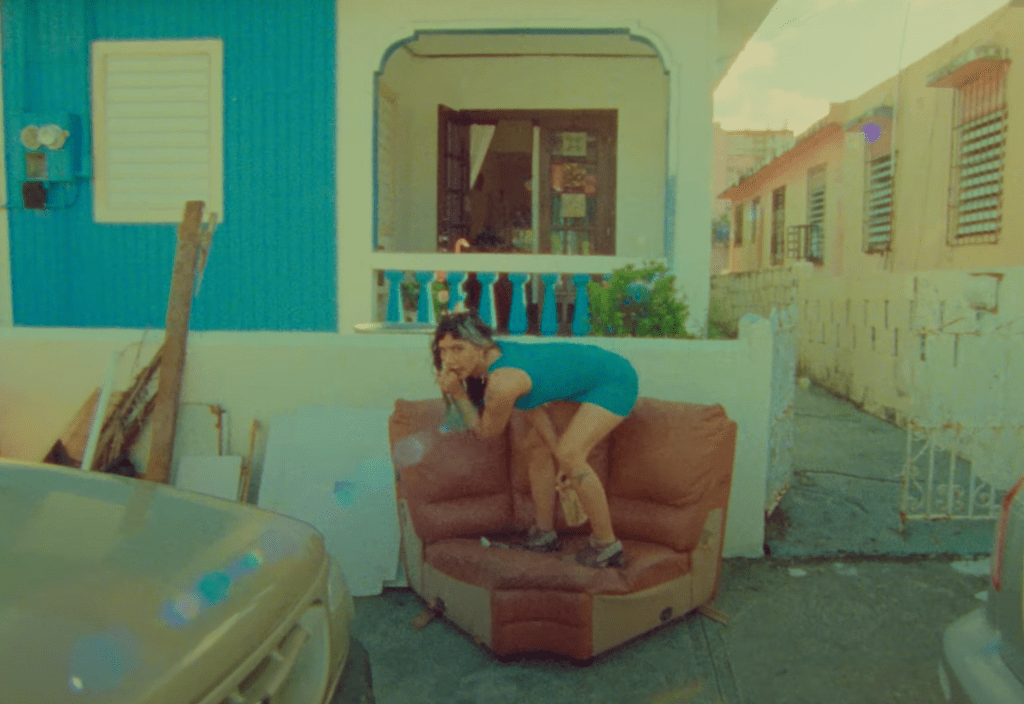
Featured Image: Still image by SO! from RaiNao’s “Tentretiene”
—
Cloe Gentile Reyes (she/her) is a queer Boricua scholar, poet, and performer from Miami Beach. She is a soon-to-be Faculty Fellow in NYU’s Department of Music and earned her PhD in Musicology from UC Santa Barbara. Her writing explores how Caribbean femmes navigate intergenerational trauma and healing through decolonial sound, fashion, and dance. Cloe’s poems have been featured in the womanist magazine, Brown Sugar Lit, and she has presented and performed at PopCon, Society for American Music, International Association for the Study of Popular Music-US Branch, among several others.
—
REWIND!…If you liked this post, you may also dig:
Contra La Pared: Reggaetón and Dissonance in Naarm, Melbourne—Lucreccia Quintanilla
“How Many Latinos are in this Motherfucking House?”: DJ Irene, Sonic Interpellations of Dissent and Queer Latinidad in ’90s Los Angeles—Eddy Francisco Alvarez Jr.
Unapologetic Paisa Chingona-ness: Listening to Fans’ Sonic Identities–Yessica Garcia Hernandez
SO! Podcast #74: Bonus Track for Spanish Rap & Sound Studies Forum
Cardi B: Bringing the Cold and Sexy to Hip Hop—Ashley Luthers
Share this:


Current Top Posts





April 2021

January 2020

November 2019

October 2019

August 2019

April 2014

November 2017

March 2015

December 2017

October 2015
 Sounding Out!
Recent Comments